


Last Updated: November 7, 2026
Quick Summary
Artisan goods cost more because you are paying for a person's time, training, and judgment, not just the object itself. Labor is the largest single line in handmade pricing, and small-batch makers cannot buy materials at container volume or spread setup costs across thousands of units.
- A factory spreads labor across thousands of units; a maker pays for every hour on one piece.
- Small-batch production raises per-unit material cost because makers cannot buy at container volume.
- A fair wage must cover materials, overhead, unsold inventory, and a margin for reinvestment.
- Handmade pieces are worth it when used often, kept long, and hard to replace identically.
- Ask who made the piece and whether the material is named specifically before paying a premium.
Table of Contents
- What Artisan Goods Are and Why Their Prices Start Higher
- Why Handmade Goods Cost More: Labor, Time, and Skill
- A Real Cost Breakdown of One Handcrafted Item
- Handmade vs Mass-Produced Products: Where the Price Gap Comes From
- Fair Trade Artisan Goods and What Fair Wages Actually Mean
- Are Handmade Products Worth It? Judging Value and Durability
- Build a Curated Home With Artisan Pieces From Pink Pig Westport
- Frequently Asked Questions
What Artisan Goods Are and Why Their Prices Start Higher
Artisan goods are products made by a skilled craftsperson, usually in small quantities, where the maker controls the design, materials, and finishing rather than a machine or assembly line. That control is the reason artisan goods cost more than factory-made items: you are paying for a person's time, training, and judgment, not just the object itself.
This is a question many shoppers ask when comparing handcrafted pieces to big-box alternatives. The gap is real, and it is explainable.
The Difference Between Raw Goods, Processed Goods, and Artisan Products
Raw goods are materials pulled straight from the earth or a farm: clay, wool, walnut, palm fiber.
Processed goods are those materials turned into standardized inputs by machines, at volume, to a fixed specification.
Artisan products sit at the end of that chain, but they are not simply "processed with care." A craftsperson buys raw or lightly processed material, then shapes it by hand or with hand-guided tools, adjusting for the grain, the thickness, the flaws in that specific piece.
That adjustment is invisible in a product photo. It is also where most of the cost lives.
Why Handmade Goods Cost More: Labor, Time, and Skill
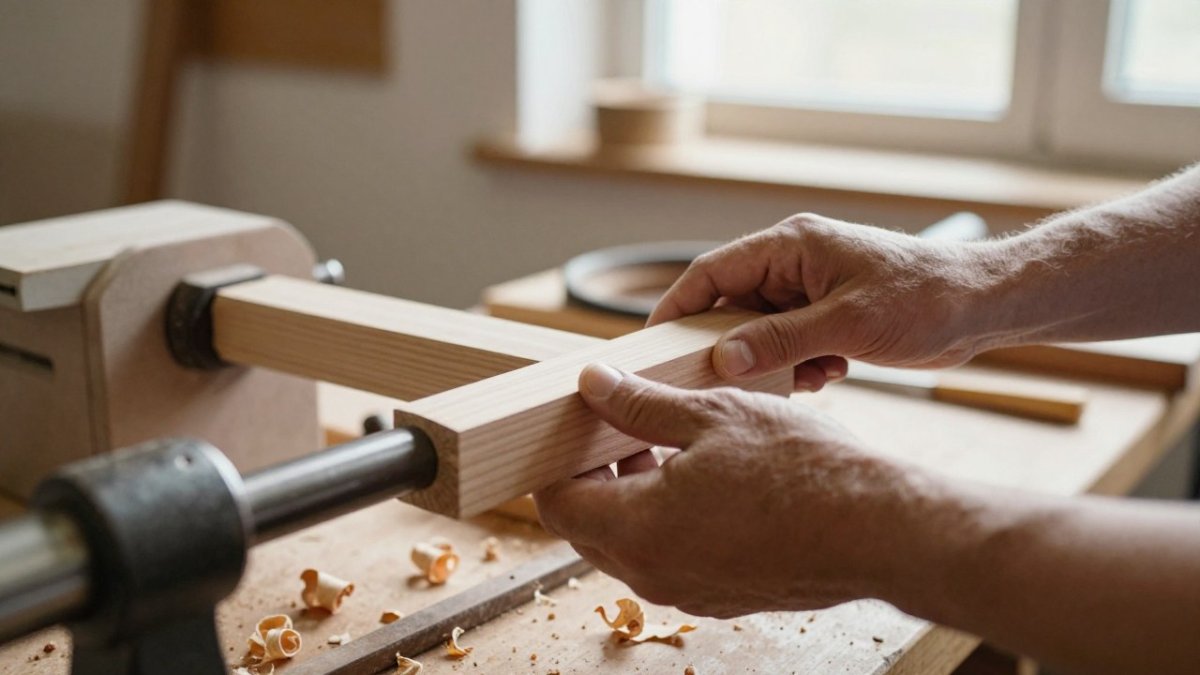
Labor is the single largest line item in handmade pricing, and it is the one buyers underestimate most. A factory spreads labor across thousands of units and pays for repetitive motion. A maker pays for every hour on one piece, including the hours spent on pieces that fail.
How Many Labor Hours Go Into a Single Piece
The honest answer is that it varies enormously by craft, and any maker quoting you a precise number for "handmade goods" in general is guessing. What we can say: hand-turned wood, hand-woven fiber, and hand-finished metal all require setup, shaping, and finishing passes that cannot be compressed without changing the result.
A common mistake buyers make is comparing a handmade item's price to a factory item's price per unit, rather than per hour of human attention. Do the second math and the gap usually narrows fast.
A Real Cost Breakdown of One Handcrafted Item
Here is how a handcrafted piece actually gets priced, using our Artisan Walnut Cutting Board as the reference point. Every maker's numbers differ, but the categories do not. The table below shows the structure; the worked example after it shows how the numbers combine into a retail price.

Cost Category |
What It Covers |
Typical Share of Retail Price |
|---|---|---|
Raw material |
Wood, fiber, metal, clay, plus waste from defects |
Moderate |
Direct labor |
Cutting, shaping, sanding, finishing, oiling |
Largest single line |
Overhead |
Workshop, tools, utilities, insurance |
Small but fixed |
Packaging |
Protective wrap, box, insert card |
Small |
Retail markup |
Covers unsold inventory, returns, staff, marketing |
Varies widely |
A Worked Example With Real Numbers
Take a single walnut cutting board that sells for $120. The numbers below are illustrative only and are not a quote from any specific maker or from this business.
Why the Retail Markup Is Not Padding
Small shops often hold inventory that may not sell for months, and that carrying cost has to be covered somewhere. Factories spread that risk across very large volumes, while smaller workshops spread it across far fewer pieces.
Handmade vs Mass-Produced Products: Where the Price Gap Comes From
Handmade and mass-produced products differ in three structural ways: batch size, sourcing, and design complexity. Each one adds cost that a factory model removes by design.
Small-Batch Production, Sourcing, and Design Complexity
Small-batch production means the maker cannot buy materials at container volume, so per-unit material cost rises. Setup time is spread over dozens of pieces instead of tens of thousands.
Sourcing adds another layer. A maker who buys from a specific mill, tannery, or co-op pays for traceability and consistency, and often absorbs shipping on small quantities.
Design complexity is the quiet one. Adding a rope handle, a bark edge, or a hand-carved detail costs minutes per piece in a factory and hours per piece in a workshop.
Research from the University of Maine study on artisan food experiences found that artisan experiences become more meaningful to consumers when they receive more information about how the item was made. That is not a pricing argument on its own, but it explains why the story behind a piece carries real value.
Fair Trade Artisan Goods and What Fair Wages Actually Mean
Fair trade artisan goods are products where the maker is paid a wage that reflects the labor, not the lowest amount the market will bear. The practical test is simple: if a piece is priced so low that the person who made it could not cover their own costs, someone in the chain absorbed the loss.
Hand-turned wood and hand-woven fiber take real hours, and those hours have a floor price. Our Moroccan Mini Wood Vases are hand-turned on a traditional lathe in a small workshop on the outskirts of Marrakech, and our Moroccan Woven Tray is hand-woven from palm leaves and decorated with wool.
What a Sustainable Margin Actually Requires
A fair wage is not just an hourly number. It has to cover the maker's business costs and leave a margin that survives a slow month. A common pattern in small workshops looks like this:
- Materials and direct labor are paid first, because they are the costs the maker cannot avoid on a piece that is already underway.
- Overhead, workspace, tools, utilities, and any help hired during a busy season, comes next.
- Unsold inventory is the quiet cost. A maker who produces ten pieces and sells six has to recover the cost of the other four somewhere, or the business shrinks until it cannot buy materials for the next batch.
- A margin for reinvestment is what lets the maker replace a worn tool, buy better material, or ride out a month with no orders. Without it, the workshop is one bad season from closing.
When a buyer asks why a hand-woven tray costs what it does, the honest answer usually includes all four lines. A price that covers only materials and labor is not a fair price; it is a price that borrows against the maker's future.
How to Tell Whether a Wage Is Actually Fair
Because "fair trade" is not a single enforceable standard in the United States, the label alone proves nothing. Ask where the piece was made and who made it. A shop that can answer clearly is usually telling the truth about the rest. Then look for signs that the maker's costs are covered: a price that is consistent with the hours the technique requires, a named material rather than a generic one, and a seller who can explain care and expected lifespan.
If you want to go deeper before buying, our fair trade wellness buying guide walks through what to look for.
Are Handmade Products Worth It? Judging Value and Durability
Handmade products are worth it when the piece will be used often, kept long, and would be difficult to replace with something identical. They are a poor value when you need a large quantity of something disposable.
Durability is where the math usually favors the maker. A hand-finished wooden board that is cared for properly can outlast several cheaper replacements, which changes the total cost of ownership even when the sticker price is higher. Our guide to caring for boutique pieces covers the maintenance side in detail.
How to Assess Whether a Premium Is Justified
Run this checklist before you pay a premium:
- Can the seller tell you who made it and where?
- Is the material named specifically, not just "wood" or "natural fiber"?
- Does the construction show joined, finished, or sealed edges rather than glued shortcuts?
- Is the price consistent with the hours the technique requires?
- Does the seller explain care and expected lifespan?
- Would you still want it in five years?
If most boxes are checked, the premium is doing real work. If none are, you are paying for a label.
Best for: buyers furnishing a room they intend to keep. Skip if: you need volume, uniformity, or a short-term filler piece.
Build a Curated Home With Artisan Pieces From Pink Pig Westport
The price gap between artisan goods and factory-made products comes down to hours, skill, and traceability, and none of those compress well. Knowing that does not make the decision for you, but it does make the comparison honest.
Pink Pig Westport is a woman-owned boutique curating artisan handcrafted goods, vintage-style home decor, farmhouse accents, and lifestyle essentials, with fair trade products and free shipping on qualifying orders. We would rather you understood the pricing than talked you past it.
Browse the collection, find a piece that fits the room you are actually furnishing, and join our email list to hear when new artisan work arrives.
The next time you compare two prices, compare the hours behind them. That is the number that decides whether a piece is worth bringing home. Get started with Pink Pig Westport and build a home where every piece has a maker behind it.
Frequently Asked Questions
Why do handmade goods cost more than mass-produced products?
Handmade goods cost more because one craftsperson performs the work that a factory splits across machines and low-cost assembly lines. A single artisan may spend several labor hours on one piece, pay for quality raw materials in small quantities, and absorb the cost of design, finishing, and packaging. Factory-made items spread those costs across thousands of units.
Are handmade products worth it compared with cheaper alternatives?
It depends on how long you plan to keep the item and how much you value uniqueness. Artisan goods often use quality materials and attention to detail that support durability, so the cost per year of use can be lower than replacing a cheap item repeatedly. Compare the price against how often you will use the piece, whether it can be repaired, and whether the design is something you cannot find elsewhere. For a gift or a piece you will display daily, the premium is often easier to justify.
What is the difference between artisan-made and fair trade artisan goods?
Artisan-made describes who made the item and how: a craftsperson using skilled labor, often in small-batch production. Fair trade artisan goods add a commitment to how that maker is paid and treated, including fair wages and safe working conditions. Not every handmade item is fair trade, and not every fair trade item is handmade. When you buy from a boutique that vets its suppliers, you can ask where the artisans are located and how they are compensated, which is the clearest way to confirm the fair trade claim.
How can you tell if a handmade product is good quality?
Look at the details a factory rarely bothers with: even finishing, tight seams, smooth edges, and hardware that feels solid rather than light. Check whether the listing names the material and the maker or region, since transparent sourcing is a strong signal. Ask whether the piece can be cared for or repaired, such as a wood board that can be re-oiled. Reviews and return policies matter too. A seller confident in craftsmanship usually offers clear care instructions and stands behind the product.
