


Quick Summary
The best wool throw blankets for a couch are a soft merino throw for everyday use, a lambswool throw for cold rooms, a mid-weight woven throw for durability, a chunky knit for style, and a wool-blend throw for budget buyers. Choose by fiber, size and weave, since color alone says little about warmth or wear.
- Choose a 50-by-60-inch throw for one seated adult, and 54 by 72 for one person with overhang.
- Merino is lightweight, breathable and well suited to year-round use.
- Lambswool is finer and softer than mature wool, and warm for its weight.
- Chunky knits are snag-prone, so keep them away from pet claws and jewelry.
- Never put a wool throw in a hot dryer, since heat can felt and shrink it permanently.
Table of Contents
- How to Choose a Wool Throw for Your Couch
- Five Wool Throw Blankets Worth Considering
- Caring for a Wool Throw So It Lasts
- Choosing a Luxury Throw That Fits Your Budget
- Frequently Asked Questions
How to Choose a Wool Throw for Your Couch
Last Updated: November 5, 2026
Wool throw blankets earn their place on a couch: warm without bulk, they drape well and outlast cotton or synthetic throws. Work through four decisions in order: fiber, size and drape, warmth and breathability, and household performance. Selecting the perfect throw blanket size ensures that the material provides full coverage without overwhelming your seating area.
Fiber first. Lambswool, a young sheep's first shearing, is finer and softer than mature wool, warm for its weight, and prone to felting if washed warm. Merino is a fine-fiber wool bred for softness and breathability, and is well suited to year-round use. Alpaca is warmer than sheep's wool at the same weight, with a silky hand and heavy drape, but it stretches, so it suits decorative draping over daily lounging. Ask for the fiber percentage; a throw labeled only "wool" may be a blend.
Size and drape. A 50-by-60-inch throw covers one seated adult from lap to shoulder; 54 by 72 covers one person fully with overhang and folds over a couch back; 60 by 80 covers two people or drapes across a sectional. Measure seat depth, arm height, and the back length you want covered. A throw shorter than the seat depth slides to the floor when someone stands; one longer than the back pools behind the cushions. On a two-cushion loveseat, one 50-by-60 throw reads as intentional; on a three-cushion sofa, size up or plan on two.
Warmth and breathability. Weight and weave decide how the throw feels more than fiber alone. A lightweight, finely woven merino suits year-round use and layering; a heavier knit or dense lambswool feels cozier in winter but runs warm in a heated room. If someone reaches for it nightly, err toward a mid-weight weave.
Itch, shedding, and household performance. New wool throws shed for the first few weeks, air them outside and shake gently rather than washing immediately. With pets or children, choose a tight weave with bound edges over an open chunky knit, since loose loops snag on claws and toys. Dark solids hide pet hair; patterned weaves hide small stains.
Watch out: putting a wool throw in a hot dryer can felt the fibers and shrink the piece permanently, and that damage cannot be reversed.
Five Wool Throw Blankets Worth Considering
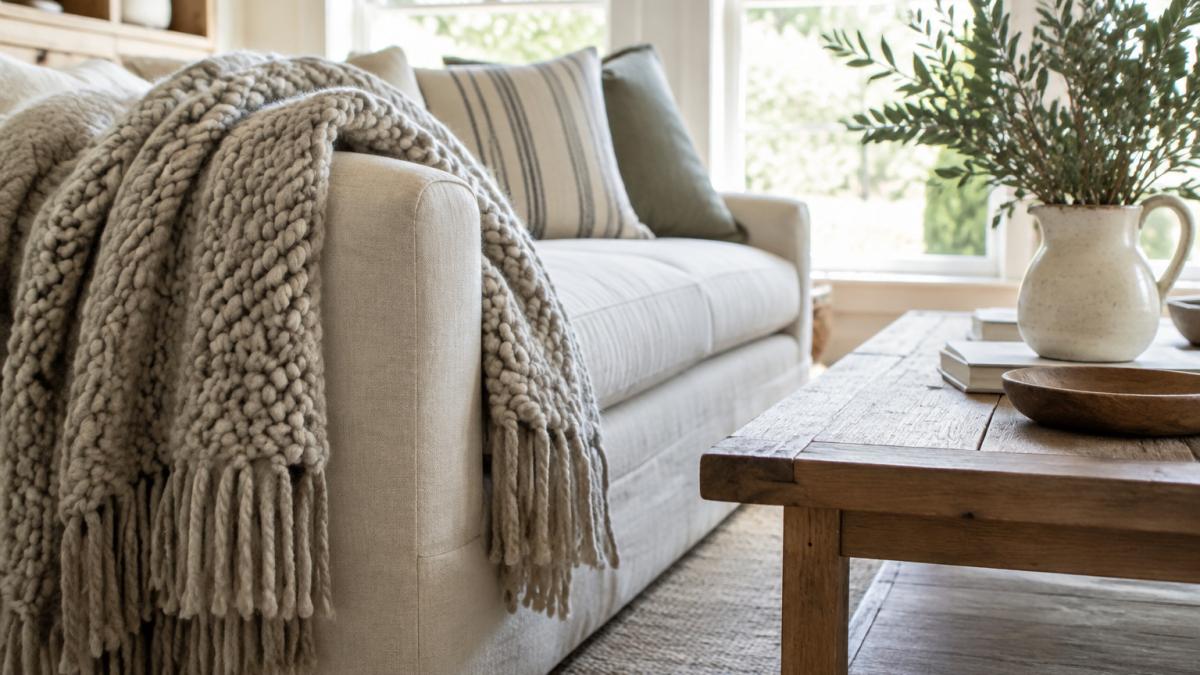
Wool throws vary widely in fiber, weight, weave, and finish, so compare them on those specifics rather than color alone. The five profiles below cover a soft everyday merino, a warm lambswool, a durable mid-weight weave, a decorative chunky knit, and a budget blend. Prices are in USD at typical full retail; confirm the current figure before buying.
1. Soft everyday pick: merino wool throw. The Luna Merino Wool Blanket, $150.00, is a 100% merino wool throw measuring 60 by 60 inches in six colors. Its fine merino fiber is lightweight, breathable, and luxuriously soft. The square footprint suits a standard sofa, so measure first if two people will share it. You can compare sizes and colors for the Soleil Merino Wool Blanket.
2. Warmth pick: lambswool throw. Lambswool comes from a sheep's first shearing, so it is finer and softer than standard wool. A 54-by-72-inch lambswool throw covers one adult from shoulder to foot with overhang and folds neatly over a couch back, the better choice for a cold room or a drafty spot near a window.
3. Durability pick: mid-weight woven wool throw. A tighter, denser weave in the 52-by-70-inch range resists snags and holds its shape through daily use better than an open knit. Look for a flat or twill weave with bound edges rather than fringe if the throw will be sat on and pulled around. This is the workhorse of the group: less plush than merino, but most likely to still look presentable after several years.
4. Style pick: chunky knit wool throw. A 50-by-60-inch chunky knit is the decorative choice, texture on a neutral sofa that photographs well draped over an arm. The open structure makes it airy rather than intensely warm, and its loose loops are the most snag-prone of the five, so keep it away from pet claws and jewelry. Treat it as a layering piece over a lighter blanket rather than a sole source of warmth.
5. Budget pick: wool-blend throw. A wool blend, typically wool mixed with cotton or a synthetic, lowers the price while keeping some of wool's warmth and drape. Check the fiber content: a higher wool percentage means more warmth and better temperature regulation, while more cotton or synthetic means more machine-washability and less itch risk. Blends are the sensible entry point if you are testing whether wool suits your household before buying pure wool.
Across all five, the comparison that matters is cost per use against fiber content and construction. A $150.00 merino used nightly for three years costs a few cents a night; a cheaper blend that pills and gets relegated to the closet costs more in practice. Match the throw to how often it will be used, and buy the heaviest, tightest construction your budget allows for a couch with daily traffic.
Watch out: a throw sold as "wool" without a percentage on the label may be a blend, so read the fiber content before comparing prices.
The five picks differ mainly in fiber, weight, weave and cost, so the table below sets out each one's standout trait.
Pick |
Best for |
Key difference |
|---|---|---|
Luna Merino Wool Blanket |
Soft everyday use |
100% merino, $150.00, 60 by 60 inches |
Lambswool throw |
Cold rooms |
Finer, softer than standard wool; 54 by 72 inches |
Mid-weight woven throw |
Daily durability |
Tighter weave; 52 by 70 inches; resists snags |
Chunky knit throw |
Decorative style |
Open structure; 50 by 60 inches; snag-prone |
Wool-blend throw |
Budget entry point |
Lower price; check wool percentage |
Caring for a Wool Throw So It Lasts
Check the care label on any wool throw before washing, since many wool pieces need cold water and a gentle cycle or hand washing.
Choosing a Luxury Throw That Fits Your Budget
A higher price usually reflects finer fiber, tighter knitting, and better finishing. You can browse the full range of throws to compare prices and styles. Set a budget first, then decide which features matter most. If the throw is mainly decorative, a mid-range option may be enough. If it will see daily use, invest in a heavier-duty wool that resists pilling.
A reader on a tighter budget can also consider the Geo Block Printed Cotton Throw, a hand block printed 100% cotton throw from Pink Pig Westport's bedding collection.

Frequently Asked Questions
What is the best size throw blanket for a couch?
For a standard three-seat sofa, a throw around 50 by 60 inches covers the seat and one arm without swamping the cushions. Larger throws, around 60 by 80 inches, work better for sectionals or for wrapping up fully. Measure the length of your sofa and the depth of the back cushions before buying. A throw that drapes over the armrest on one side and reaches the seat on the other usually looks most intentional. If you plan to use it for warmth, choose the larger size.
How do you care for a wool throw blanket?
Most wool throws should be hand washed in lukewarm water with a wool-safe detergent, or dry cleaned if the label says so. Avoid wringing the fabric; press out water gently and lay it flat to dry away from direct heat. To reduce pilling and shedding, brush the surface lightly with a soft brush and rotate use across the couch. Store folded in breathable fabric rather than plastic, and add cedar or lavender to deter moths.
Are wool throw blankets warm enough for winter?
Wool retains heat well and breathes, so a wool throw can add noticeable warmth on a couch during winter evenings, especially when layered over a lighter blanket. Merino wool is finer and often feels softer, though standard wool is typically heavier and warmer for the same size. For the coldest months, look for a denser weave and a larger size that can wrap your legs and shoulders.
