


Last Updated: November 19, 2026
Quick Summary
Flip the piece over and check the back, inside seams, and hidden parts first, because makers who care finish what buyers never see. True handmade quality shows human variation, tool marks, and specific provenance, while factories hide shortcuts and repeat identical flaws. Ask who made it, where, and from what material.
- Run your fingers along inside seams: tight, even stitching signals care, loose wavy lines signal speed.
- Handmade pieces show texture irregularity, color variation, and tool marks like chisel cuts or loom lines.
- Ask how many units exist; a maker citing a batch number describes small-batch work, not a production line.
- Request photos of the underside, main seam, and maker's mark in flat, even light before buying online.
- Judge handmade status and construction quality separately, since a hand-thrown bowl can still wobble.
Table of Contents
- Start With the Flip Test: Hidden Details Tell the Real Story
- How to Identify Authentic Handmade Products Through Materials and Tool Marks
- How to Tell If a Handmade Product Is Mass-Produced
- Signs of Quality Craftsmanship That Separate Well-Made From Merely Handmade
- Your Handmade Product Quality Checklist for In-Store and Online Buying
- Shop the Collection With a Trained Eye
- Frequently Asked Questions
Start With the Flip Test: Hidden Details Tell the Real Story
Flip the piece over. That's the fastest way to spot handmade quality. Makers who care about their work finish the back, the inside, and the parts you'll never show off. Factories hide shortcuts where buyers don't look.
Turning a piece upside down is one of the simplest ways to check it before you buy.
Seams, Facings, and the Underside
Run your fingers along the inside seams. Tight, even stitching signals care. Loose, wavy lines signal speed. On garments, check the facings and hems too. A clean inside facing means the maker expected someone to look.
Rough Edges, Loose Threads, and Excess Glue
A few stray threads are normal on handmade goods. Clumps of glue are not. Watch for glue seeping out of seams, rough edges left unsanded, and hardware screwed in crooked. Those are signs of a rushed job, not a handmade one.
How to Identify Authentic Handmade Products Through Materials and Tool Marks
Authentic handmade products show evidence of a human hand at work.
Natural materials help here. Real wood has grain that shifts. A block-printed napkin, like the Sunflower Yellow Block Printed Napkins, can reveal tiny misalignments where each stamp met the fabric.
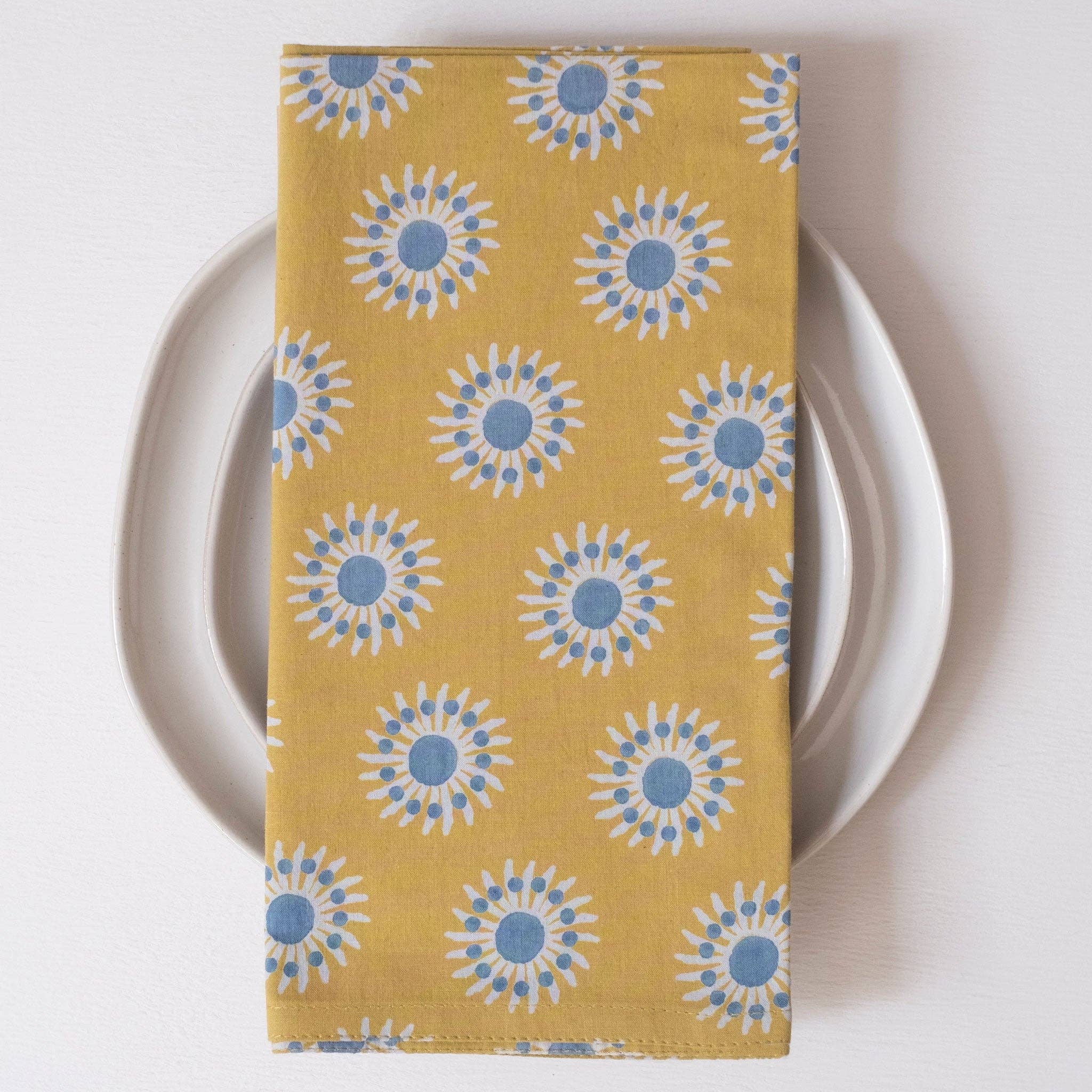
For a deeper look at how block printing works, read our guide on what a block print quilt is.
How to Tell If a Handmade Product Is Mass-Produced
Mass-produced goods often borrow the look of handmade items without the substance. Uniformity is one tell, but it is not the only one, and it is not always reliable. A small studio can produce a run of twenty identical cutting boards; a factory can distress each unit by hand to fake variation. The stronger approach is to look for production-scale signals that are hard to fake at low volume.
Uniformity, Color Variation, and the Consistency Trap
Buyers often mistake perfect consistency for quality. It is usually the opposite. Handmade quality shows up as individual variation, not machine-like sameness.
But variation alone proves nothing. A factory can tumble-stone or hand-sand every unit to introduce scuffs. The question is whether the variation follows a human logic.
Watch out: comparing two units side by side only works if the seller shows you two units. If every listing photo is the same hero shot, you have no variation evidence at all.
Production-Scale Signals Beyond Uniformity
Four signals separate small-batch making from factory output more reliably than surface variation:
- Repeatability across a large run. Ask how many units exist. A maker who says "forty this season" is describing a batch. A seller who cannot state a number, or who shows fifty identical units in one photo, is describing a production line.
- Sourcing story. Factories buy components in bulk and rarely know the mill, tannery, or clay body. Ask what material the piece is made from and where it was sourced. A potter knows the clay body and the glaze recipe. A factory buyer knows the SKU.
- Hardware and findings. Mass-produced bags and garments use stock zippers, stock buttons, and stock rivets sold by the thousand. Handmade work often uses hardware the maker can name, replace, or finish by hand. Loose, identical hardware across a whole product line is a scale signal.
The Documentation Test
Provenance is the hardest thing for a mass producer to fake at low cost. Ask for the maker's name, the workshop location, and the date or batch the piece came from.
If you are wondering why artisan goods cost more than factory-made products, the answer usually lives in that slow, human process, and the documentation trail that comes with it.
Signs of Quality Craftsmanship That Separate Well-Made From Merely Handmade
Handmade and well-made aren't the same thing. Someone can make a wobbly table by hand. Quality craftsmanship means the maker also cared about construction, finishing, and durability.
Here's what separates the two:
- Tight seams and even top-stitching on textiles
- Sanded, sealed edges on wood and metal
- Buttons sewn with real thread, not glued on
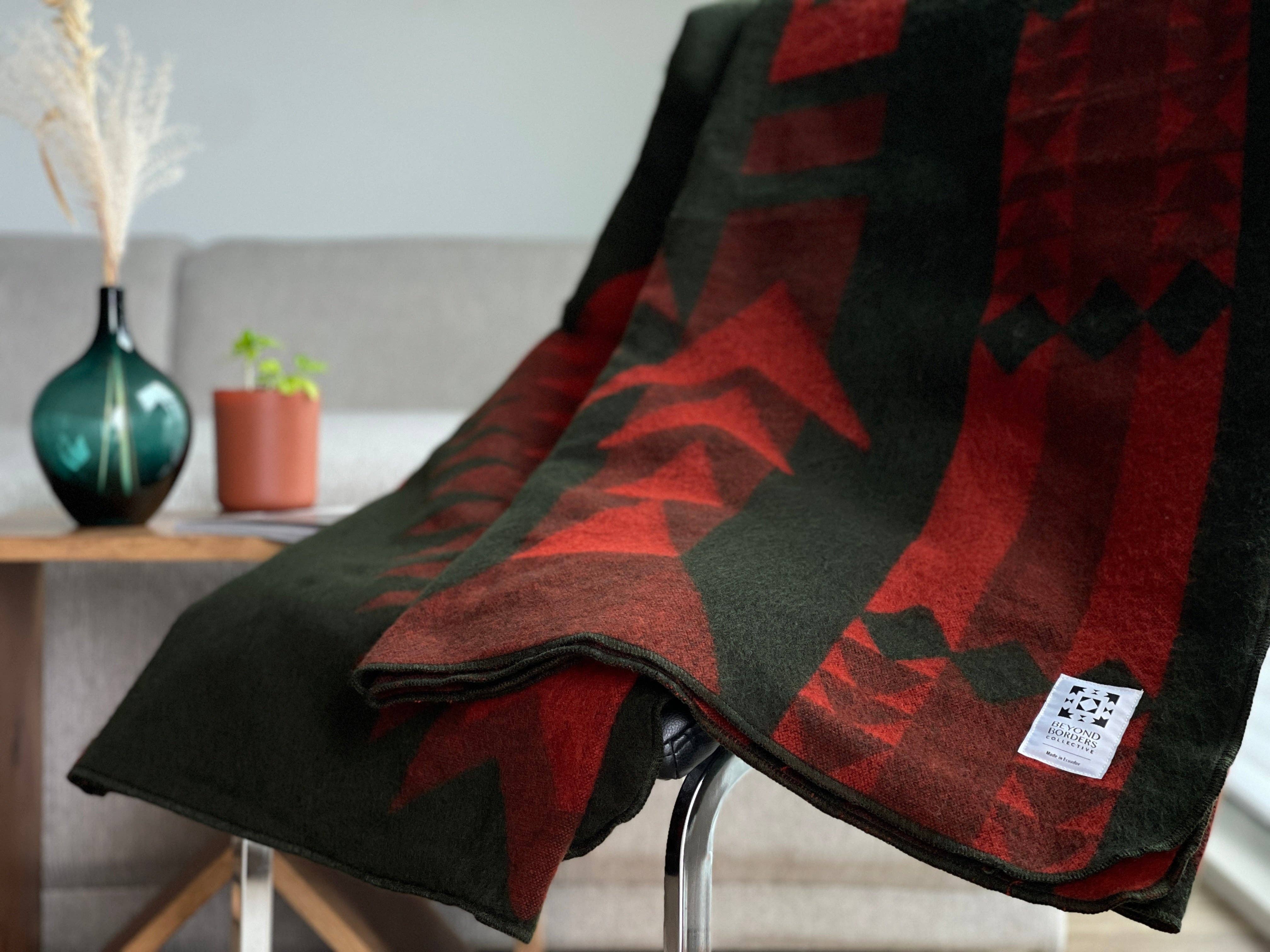
A hand-carved piece like our Guardian Angel shows bark texture on one side and wood grain on the other. For more examples of this standard, browse our heirloom quality home decor gifts.
Your Handmade Product Quality Checklist for In-Store and Online Buying
Use the same checklist whether you are holding the item or scrolling a product page, but adjust the checks to the material and to what you can actually observe. Most buying guides stop at "check the seams." A garment, a chair, a bowl, and a belt fail in different places, so the checklist has to split by category.
Cross-Category Inspection Checklist
| Category | In Store | Online |
|---|---|---|
| Garments and textiles | Flip inside out; check seam tension, facings, hem depth, and button attachment | Request interior and seam close-ups; ask for fiber content and care label |
| Leather goods | Flex the strap; check edge finishing, stitch density, and lining attachment | Ask for edge-paint and stitch close-ups; confirm full-grain versus corrected-grain |
| Wood furniture and decor | Run a hand under edges; check joinery, sanding grit, and finish coverage | Request underside and joint photos; ask about joinery type and finish |
| Ceramics | Check foot ring, rim thickness, and glaze pooling; tap for a clear ring | Ask for foot-ring and rim photos; confirm food-safe glaze |
| Metal | Check weld or solder cleanup, hardware alignment, and finish uniformity | Request joint close-ups; ask about finish and coating |
What to Request From an Online Seller
Remote buying is a photo-based inspection. Ask for specific images such as the underside or back, a close-up of the main seam or joint, and a photo of the maker's mark or label.
Watch out: listing photos are often lit and styled to hide finishing flaws. Ask for a photo in flat, even light, and ask whether the photo shows the exact unit you will receive or a representative sample.
Verifying Seller Claims and Provenance
Ask three questions: Who made this? Where? From what material? A confident seller answers fast. Vague answers about "artisan partners" with no names or locations are a warning sign.
Follow up with one question that tests specificity: ask what part of the process the maker did themselves. A maker who can name the step they outsourced, such as buying pre-cut leather and stitching in-house, is describing a real workflow.
Quality Versus Handmade Status
Handmade does not automatically mean well-made. Separate the two judgments. Handmade status is about who made the item and how. Quality is about whether the construction will hold. A hand-thrown bowl with an uneven foot ring can still be beautiful, but it may wobble on a flat surface. A hand-sewn bag with loose stitch tension may fail at the strap.
Shop the Collection With a Trained Eye
Now you know what to look for. The flip test, the seams, the tool marks, the variation.
That's the standard we hold at Pink Pig Westport.
Start with one piece. Turn it over. Check the details. Then build a home that rewards the looking.
Ready to shop with confidence? Join our email list for first looks at new artisan arrivals, and get free shipping on qualifying orders.
Frequently Asked Questions
Are small variations a sign of handmade craftsmanship?
Yes, within limits. Slight differences in stitch length, dye depth, or shape are normal evidence of a human hand at work, and What you should not accept is variation that signals carelessness: skipped stitches, crooked hems, or glue smears. The test is whether the irregularity looks intentional and controlled or rushed and sloppy.
How can you tell whether a product is truly handmade or mass-produced?
Flip it over. Mass-produced goods usually hide their construction, with sealed seams, heat-fused edges, and perfectly identical units. Handmade pieces show tool marks, slight color variation, visible top-stitching, and small asymmetries from piece to piece. Ask the seller how and where it was made, and check that the answer names a specific maker or workshop rather than a vague claim. A handmade product is also rarely available in unlimited quantities.
What should you look for when checking the quality of handmade decor?
Check the underside and interior first, since that is where shortcuts show. Look for tight seams, sanded edges, even finishes, and hardware that sits flush. On woven pieces like a willow pendant shade, examine whether the weave is consistent and the rim is bound cleanly. Then assess material quality: solid wood grain, natural fiber texture, and cotton that feels substantial. Our handmade product quality checklist covers each of these points step by step.
What questions should you ask before buying a handmade item online?
Ask who made it and where, what materials were used, and how it should be cared for. Request a photo of the back, underside, or interior if the listing does not show one. Confirm the return policy, since handmade goods often have limits. A seller who can answer specifically, such as naming the artisan workshop or the dye process, is far more credible than one who repeats the word handmade without detail.
